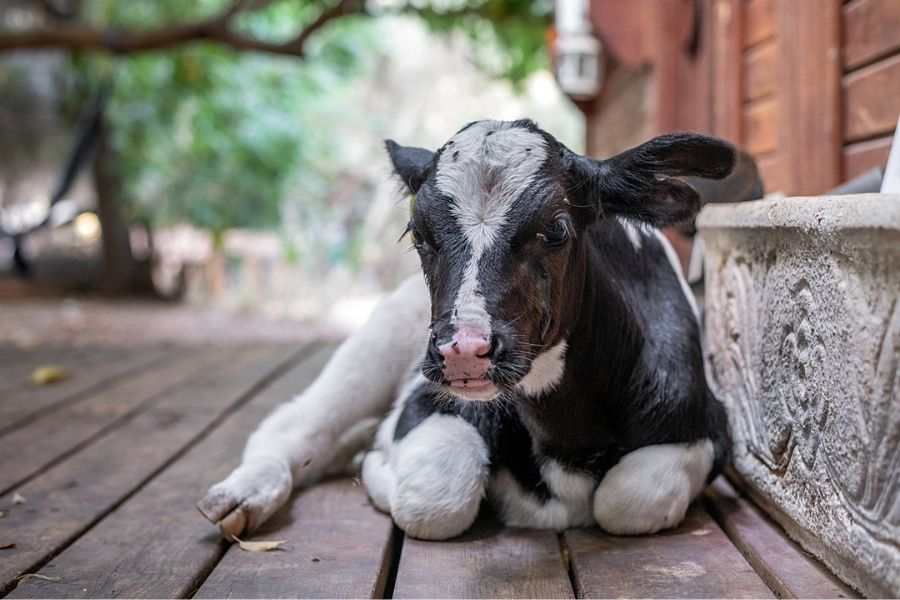
Many of us have had the good fortune to know animals as individuals. We care for the animals we share our home with, and we get to know their personalities and their wants and needs. We form emotional bonds, and even see them as members of our family. Most people genuinely care about animals.
While we go out of our way to care for our companion animals, most of us have a different relationship to the animals we eat, such as cows, pigs, chickens and fish. Yet, like dogs and cats, these animals are sentient, meaning they can feel emotions like joy and pain, bonding and loss.
Categorising animals into two groups–those we love and those we eat–is an example of cognitive dissonance. Cognitive dissonance describes the discomfort that arises when a person’s beliefs are inconsistent with their actions. It explains how people–who otherwise care about animals–justify the use of animals for food, clothing, entertainment and so on.
Speciesism describes the belief that one species is superior to others, often resulting in discrimination or exploitation of other species. In Australia, 600 million animals are confined and killed every year for food–that’s 1.6 million animals every day, and 19 animals every second.
The animal farming industry operates under the false notion that the animals you eat live happy lives on small, family farms. The reality is that most animals live on factory farms under horrendous conditions. The life of a farmed animal is filled with pain, sickness, crowding, filth, loss, loneliness and premature death. Recent and widespread footage of the suffering of animal exploitation is well-documented and readily accessible. Check out the resources below to learn more.